

Why do RFID projects fail? After more than 20 years deploying RFID across retail, pharma, manufacturing and logistics, Coriel Solutions CEO Philip Leslie has a clear answer, and it’s probably not what you’d expect.
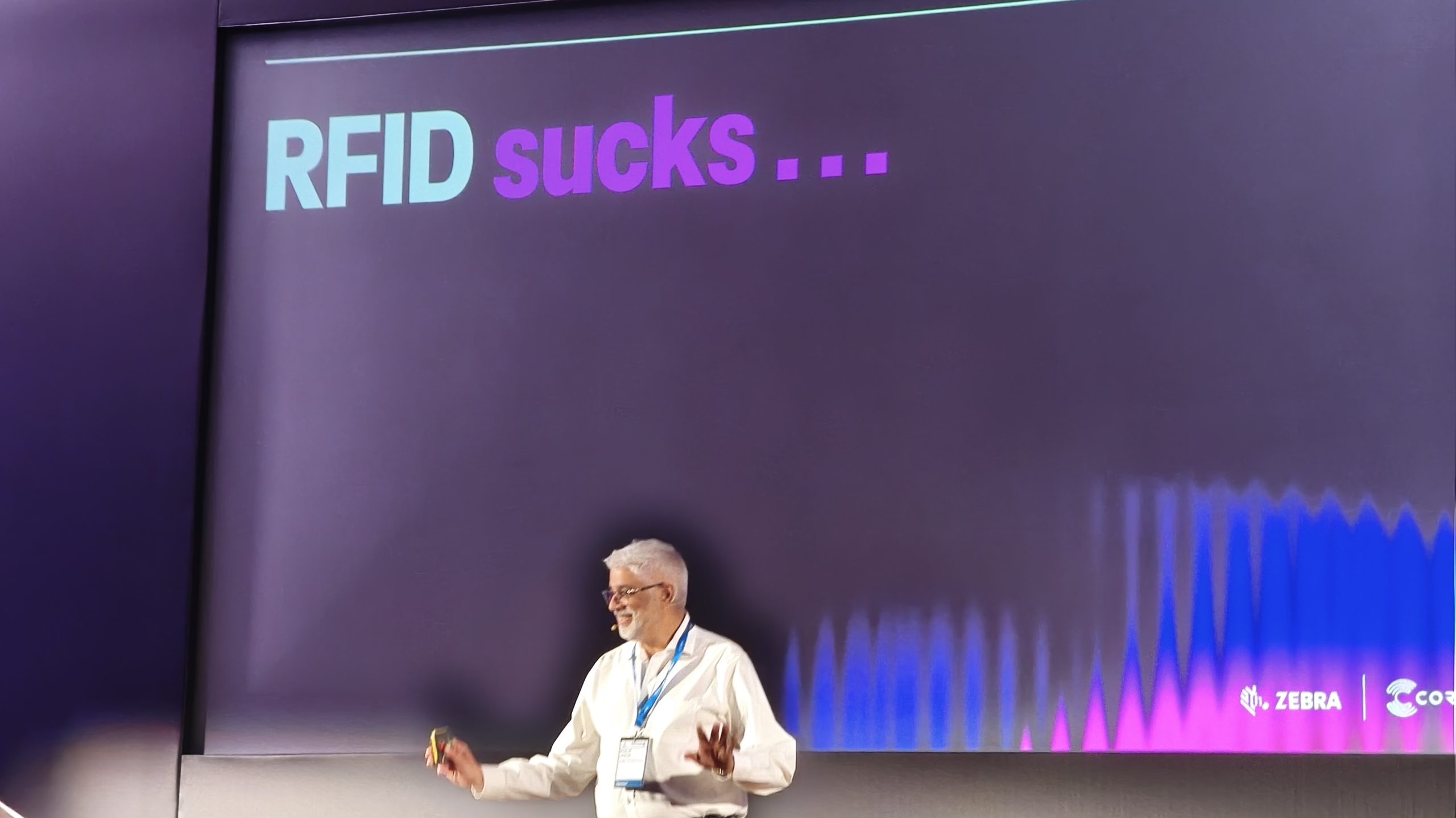
At the Zebra RFID Forum in Warsaw, Philip opened his session with a slide that got the room’s attention. It said: RFID sucks.
Not his words. Those were the words of an Operations Director Philip met during a discovery workshop, someone who had invested in RFID, watched it struggle, and drawn the obvious conclusion.
Philip’s response, drawn from more than 20 years of deploying RFID across retail, pharma, manufacturing and logistics, is that they weren’t wrong. The project had failed. But the technology wasn’t the reason.
“When most businesses say RFID failed, what they usually mean is the project didn’t deliver what they expected. And that’s a very different problem.”
In his experience, the readers worked. The tags worked. The software worked. The failure happened somewhere else — in workshops, in assumptions, in shortcuts, in decisions nobody thought would matter later. Usually long before the hardware was ever installed.
Because operations, as Philip puts it, always wins.
So what actually decides whether an RFID project succeeds? Philip walked the Warsaw audience through seven questions he’s seen determine the outcome, time and again.
1. Is RFID actually the right choice?
RFID is one of those technologies people desperately want to use, even when the business problem doesn’t justify it. Sometimes a barcode is enough. Sometimes process redesign solves the issue faster. Sometimes the business simply isn’t operationally ready.
The real starting point isn’t hardware, software or tags. It’s a clear answer to a simple question: what problem are you actually trying to solve? Inventory accuracy? Traceability? Lost assets? Labour cost? Compliance?
If you can’t answer that clearly, the project will struggle later. And the follow-up question: ‘what’s the cost of doing nothing?’ is equally important. That’s the conversation your CFO cares about. If you can’t answer it, the project is unlikely to get the support it needs to succeed.
2. Does the design match operational reality?
This is where many projects start getting into trouble.
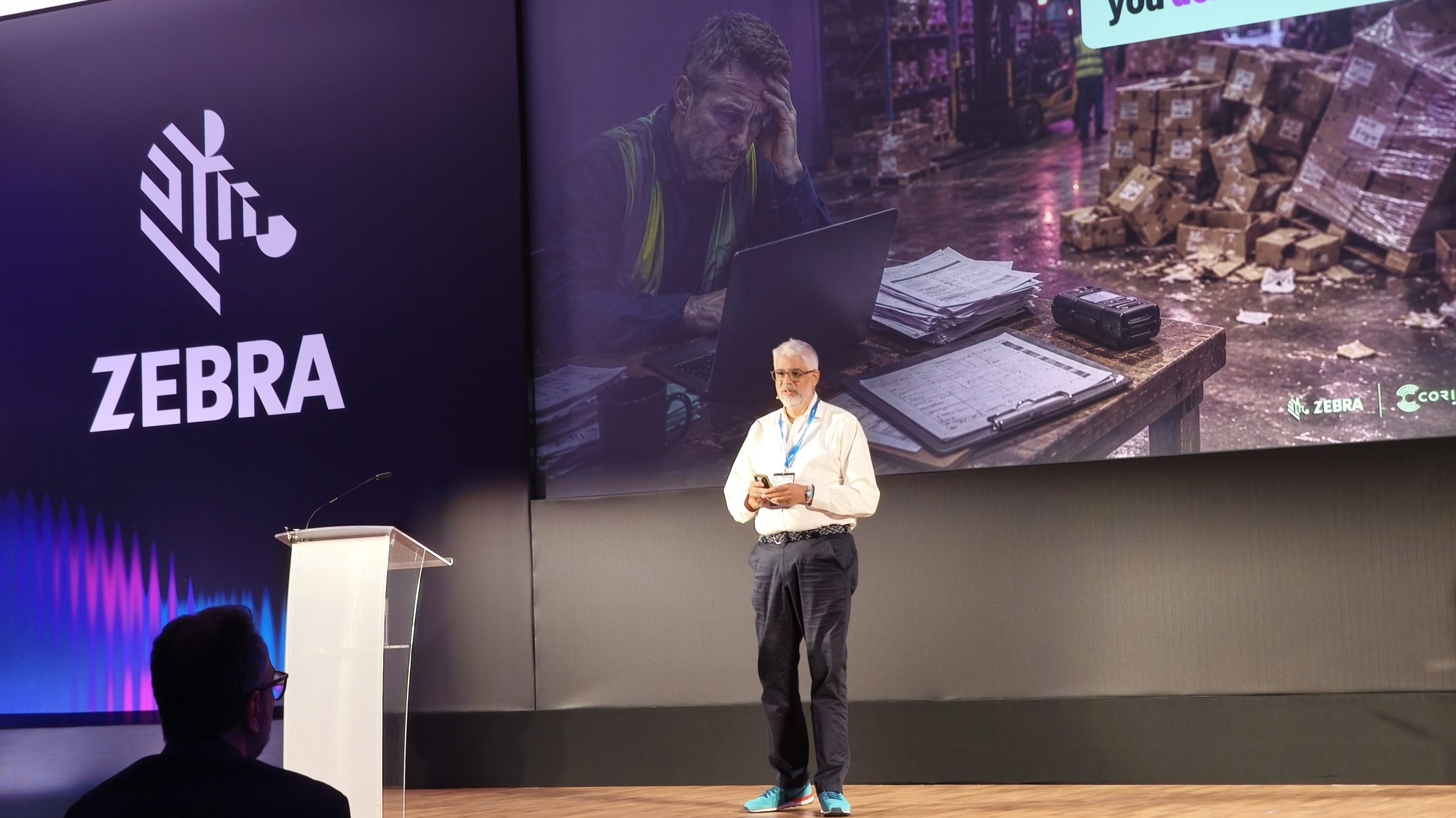
No matter what the process diagram says. No matter what the workshop agreed. No matter what the presentation deck looked like. Operations always wins.
Philip illustrated this with examples that will be familiar to anyone who’s deployed RFID in a real environment. The warehouse that was designed around specific transfer points – perfect read performance, perfect testing – until someone started using dock door 417. The operation where staff were told items would only ever be stacked four high. Except when they weren’t.
Every one of those moments is a decision that looked fine on paper and caused problems in practice. RFID needs to be designed for how operations actually runs, not how it’s supposed to run.
3. Has every compromise been accounted for?
RFID is a technology where small compromises become very visible, very quickly.
Engineering shortcuts happen for understandable reasons: budget, time, complexity. But eventually, operations pays for them. The wrong tag on the wrong material in the wrong environment can destroy confidence in an entire project. Choose the wrong device and people will work around it. Install the wrong hardware and the business stops trusting the data.
Once operators start questioning reads, missing events, or seeing inconsistent results, they stop relying on the system. And the project starts collapsing quietly in the background.
As Philip puts it: if it wasn’t for physics, RFID would be easy. The technology is incredibly capable. But the real world is messy, and operations can make it even messier.
4. Has the system been tested properly?
Properly means in the real world. Not in perfect conditions. Not in controlled demos. Not in ideal workflows.
Everything works beautifully in the lab. Perfect tag orientation, perfect spacing, perfect packaging. And then reality arrives. Because the lab doesn’t rush. The lab doesn’t improvise. The lab doesn’t ignore process. Real operations can, and will.
One of the most common mistakes Coriel sees with Proof of Concepts is that they become stakeholder theatre. Everyone gathers around expecting RFID reads to work and dashboards to update. But that’s not the purpose of a PoC. The purpose is to discover failure – to test and refine early, before scale makes it expensive.
If you don’t test for reality, reality will test the project for you.
5. Does the data integrate with the business?
RFID alone doesn’t create value. Business decisions do.
Nobody wakes up and says they need more data. Businesses already have too much data. What they need is clarity – better decisions, faster decisions, more accurate decisions, made in real time. That only happens when RFID data becomes operationally useful, flowing into the systems and workflows where decisions are actually made.
The question to ask isn’t “can we capture this data?” It’s “what will the business do differently because of it?”
6. Are processes actually aligned?
RFID is brutally honest. It exposes inconsistency very quickly, and sometimes that’s uncomfortable.
Businesses often expect RFID to fix operational problems automatically. It doesn’t. What it does is reveal them. The unofficial workarounds. The hidden inefficiencies. The exceptions nobody wanted to talk about. Suddenly the business can see exactly what’s actually happening, and that means being ready to change the way it works.
This is where RFID stops being a technology project and becomes a change project. The businesses that get the most value from RFID are the ones that treat it that way from the start.
7. Will it scale?
Pilots are easy. Scale is hard.
Pilots are clean, focused, well-supported and carefully managed. Real operations are chaotic. Scaling RFID means designing for that chaos, not for perfection. And critically, no two operations are ever truly identical. Different layouts, different workflows, different behaviours, what works perfectly in one site can struggle badly in another.
Scaling RFID isn’t replication. It’s adaptation. Operational and environmental detail matters at scale in ways it never does in a pilot. The businesses that scale successfully are the ones that design for variation from the beginning.
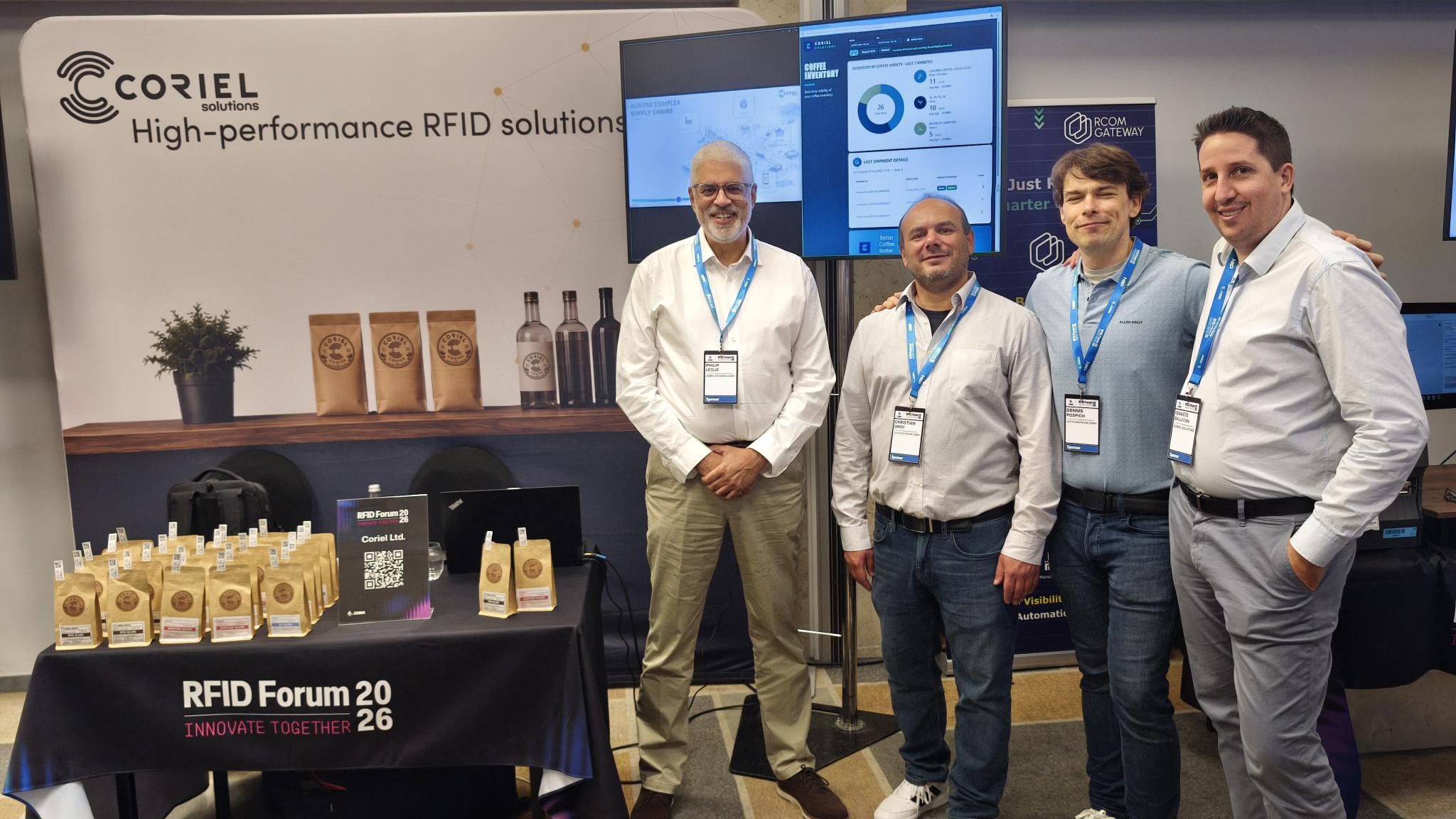
The Coriel Solutions team keeping the forum alert with branded coffee
Get these questions right and something interesting happens
Projects scale faster; adoption improves; trust improves. Operations embraces the system rather than working around it. And businesses realise the value they invested in. As Philip told the Warsaw audience: the technology is rarely the hardest part. Understanding operations, that’s the hard part. Because operations always wins. And when you respect that? RFID doesn’t suck anymore.
A big thank you to our partners Data Elektronik and to Zebra Technologies for hosting such a great event.
Coriel Solutions are RFID integration specialists with over 20 years of experience delivering projects across retail, pharma, logistics, manufacturing and beyond.
Do you fancy a coffee to discuss an RFID deployment that you’re planning or to discuss a project delivery issue that you’re working through? Get in touch.
Frequently Asked Questions
Why do RFID projects fail?
Most RFID projects don’t fail because the technology stops working – the readers, tags and software typically perform as expected. They fail because of decisions made long before go-live: unclear business objectives, designs that don’t reflect operational reality, engineering compromises that create problems at scale, and data that never gets properly integrated into the systems where decisions are made. The technology takes the blame for problems it didn’t cause.
How do I know if RFID is the right solution for my business?
The starting point isn’t the technology, it’s the problem you’re trying to solve. Inventory accuracy, asset traceability, labour cost, compliance, if you can answer clearly what the business problem is and what the cost of not solving it looks like, you’re in a strong position to evaluate whether RFID is the right answer. Sometimes a barcode is enough. Sometimes process redesign solves the issue faster. An experienced implementation partner should be willing to tell you that honestly.
What's the difference between a successful RFID pilot and a successful RFID rollout?
Pilots are controlled, well-supported and carefully managed. Real operations are chaotic. The businesses that scale RFID successfully are the ones that design for that chaos from the beginning; testing in real-world conditions rather than ideal ones, accounting for variation between sites, and treating the project as a change programme rather than a technology deployment. Scaling RFID isn’t replication. It’s adaptation.
Useful links
About Coriel Solutions — RFID Integration Specialists
Who We Are — Coriel Solutions
The Zebra RFID Forum 2026
Zebra RFID Forum — Innovate Together
RFID Proof of Delivery in Furniture Retail
Proof of Delivery, the Pharmaceutical Way